– January 2026 –
I
When I am too sad and too skinny to keep keeping, when I am a tiny thing against so many bricks, then it is I look at trees. When there is nothing left to look at on this street. Four who grew despite concrete. Four who reach and do not forget to reach. Four whose only reason is to be and be.
– Sandra Cisneros, The House on Mango Street
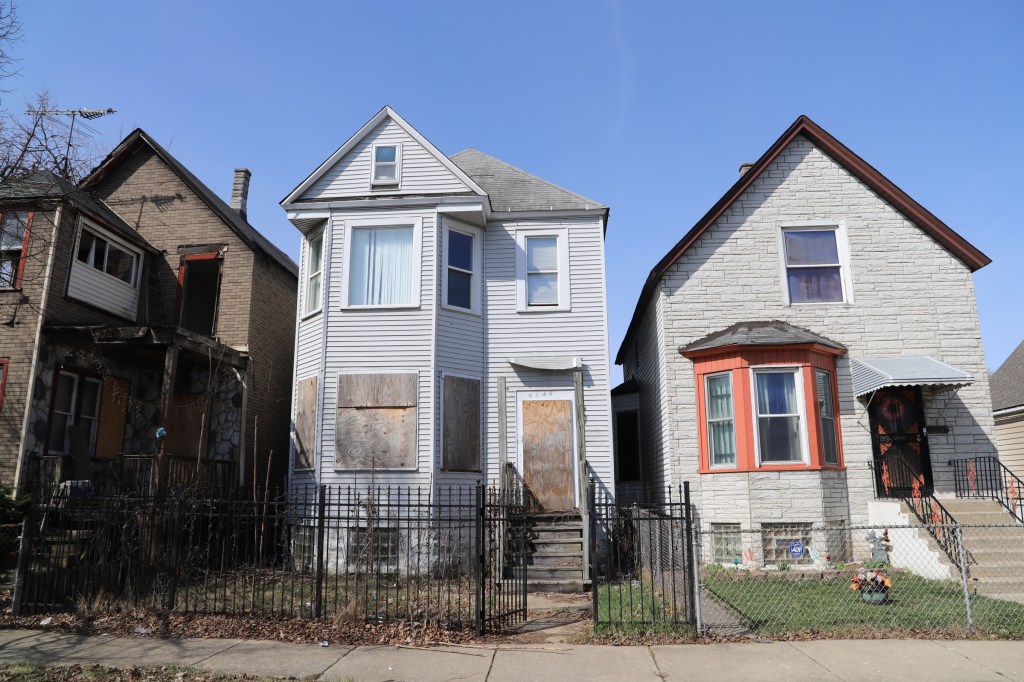
My mother lay flat against the hardwood floor as I stood at the window. A million white dandelion wishes floated there, just beyond my breath. And what to wish for, with plenty of time to think? — as my mother tunes the clock to the pace of her whims, keeps time bound up in her embrace, so I stand, arms at my side, at the window, until she chooses to release me to the street.
Dandelion wisps drift to the cracked pavement outside. I try to wish before they fall: For a house like one out in the suburbs where I begged my mother to take us driving. It is pink with blue trim or all white, and I imagine its long spiral staircase winding up to many rooms where light plays in every corner. In the car, my eyes grow damp and tired. I open my book and turn my head to my lap; my mother tells me I might as well be sitting on a washing machine.
A sleepover with the girl downstairs. At least this. We might sneak into the bathroom after my mother has gone to sleep, use our fingers to smear blue eyeshadow on our faces so she won’t notice the changed color of her brush. But no, mother says, she lives downstairs anyway. Why she gotta come up here?
In front of the window where my mother rests, I wish on dandelion snow for simple and safe beauty, though I do not have the words for that yet. And my brother calls me out to the yard which is not our yard, but which is an empty lot beside our house, is a jungle, is a safari, is a junkyard of space garbage, is the senselessness of a child’s reverie.
Mom, can I go?
Like a cat or an alligator baking in the sun, she blinks one eye slowly open and nods so I almost can’t tell she’s saying yes, just don’t leave the block.
Yes! Aaren’s silhouette in the back doorframe, carved from sun. He turns and runs and his darkness bursts to light as I run after him: through the living room and the kitchen where fruit flies feast on dishes piled in the sink, and rise in a plague as I dash past. Down the rotting back porch stairs where we thought our feet might shoot through the steps if we went too fast. Sometimes it was a game: to hopscotch one, two, three steps at a time down the wooden backbone of the apartment, until we reached the bottom and skidded, out of breath, into the dirt.
The cold summer silence of our apartment dwindles in the light. After the morning sun rises and burns the clouds from the city, the afternoon lay open and giving. We spin through the tall grasses. Find an empty gallon pickle jar among baseball cards and mattresses drowned with rain. Aaren tucks it under his arm and we run on, kicking up grass as we go, opening our palms so yellow dragontails and purple tissue paper flowers snap off between our fingers. Breathless, we kneel in the sun-dried dirt, place the jar in front of us. Our knees make divots in the grass. We lay our flowers gingerly inside, leave it there. Wait for a spider to call it home.
We stand and feel the breeze on our faces, wind running all through coiled hair. A sound rises from the horizon. I can feel it coming down the block, feel the chatter in my teeth and the rumble inside my ribs. As the sound rolls closer, it becomes clear and then fades again as a hungry-tummy grumble bass rumbles under the words. A dark-skinned man with his top down, bright red car, sitting high on big wheels. He sees my eyes peeking through the grass and he winks. I almost want to dance with the music that’s down the block now, sing words I can’t hear.
Run after it, run fast as I can — but I reach the intersection where the block ends and, like a forcefield, shoots me back. I stop short.
We have to go back soon, Aaren says. We look up and watch the lights click on and on up and down the street. We know the stars will hide under cover of city glow and ask us, by their darkness, to go home.
II
All the people in the town seemed a little lonely.
The children spoke only of fleeing home.
– Eve L. Ewing, “Sestina with Matthew Henson’s Fur Suit,” Electric Arches
My shoulders sit low under the weight of my bookbag. It’s white with green trim and speckled with flowers. Inside: A collection of Bukowski I’d found walking aimlessly up and down the aisles of the Harold Washington Library on one of those days the sun never set. A lighter. A DVD or CD: Zoolander or Green Day. It’s a day in the latter half of seventh or eighth grade.
The train chinks forward, shooting up to the North Side, until the doors open at Addison. A dozen students rush out and down the stairs to the bus stop. I stay on. I am not going to school.
I wait for the sun to pepper the sky with light, for the morning work rush to fade to the lazy rumble of afternoon traffic, where even the train seems to lose its urgency and saunters along the tracks.
A woman in a red bandanna stands between the cars, light still all wrapped in her brown hair, with a cigarette between her fingers. Her body rocks as the train rocks and I cannot see her face, but I see myself in her.
She is going, going, always going. She steals away from the day’s demands, sneaking between the train cars to blow wispy smoke into wild air. She steals freedom from her workplace, taking a lunch break that runs a few minutes too long. The world shifts around her and she slots herself into this cove between train cars. Nothing asks where she’s been or where she’s going.
Are we alike? Childhood was listening to laughter, up on the crumbling balcony outside my brothers’ room. I’d slide the squeaky window open quiet as I could and slip beneath its border, an orange notebook in hand, where I scribbled about the color of the city sky. I imagined stars would speckle the darkness and light the city so even the skyscrapers could go dark; the streetlights would never come on. But the sun always dipped to the horizon, and street lamps clicked their glow while my mother and the neighborhood women joked and drank a story below.
Between the train cars, the woman clicks a lighter against the wind. No sooner is the flame lit than a gust scatters it behind her. I ride the train up past the single digits and down past the eighties, back and forth.
III
As this wave from memories flows in, the city soaks it up like a sponge and expands. A description of Zaira as it is today should contain all Zaira’s past. The city, however, does not tell its past, but contains it like the lines of a hand, written in the corners of the streets, the gratings of the windows, the banisters of the steps, the antennae of the lightning rods, the poles of the flags, every segment marked in turn with scratches, indentations, scrolls.
– Italo Calvino, Invisible Cities
When I went to Ithaca for school, the wee hours found me sleepless in silence, in hills where the city’s grid should have been. The darkness here was different — thick and rural, pressing against the windows of my dorms. No streetlights clicking on in rhythm. No bass rumbling from passing cars. Just the wind moving through trees I couldn’t name.
I wandered to the concrete steps near a gorge as the water tumbled below. Even as the town slept, and the last stragglers from Collegetown parties and library study sessions winded their way home up the hills, the water ran, uncaring. On the precipice of the gorge, a lake sat placid beneath the black sky. In the fall, it holds the sky within it like a basin, and on warm days in April, friends and I stroll on its shores.
I remembered my walk to the lake from the house in Chicago where I lived with my aunt, after a decade of moving around with my mother. Down the block past the Oakland Sculpture Garden where plinths raised bare stumps to the sky, asking for rain. Then the jungle gym spiderweb on the playground. My brother tumbled down its ropes one day in childhood, with a spot of blood on his head to show for it. I climbed the steps of the blue bridge where one night, my aunt and I gazed, mouths agape, at a golden moon whose light coaxed our shadows from darkness.
Finally, I arrived at the lake. The water rolled and a mother cautioned her child to step back from the edge. A man ate lunch from a takeout container and played quiet songs from his phone speaker. As I passed, I told him I loved his energy, peaceful here by the water. He smiled, nodded, as if the water, piling and always receding, lulled him to sleep.
Now, in Ithaca, a different water crashed so loudly that it kept me awake. The gorges were green and stony places where the Earth yawned and invited me in on days I traced its path downtown, slipping on rocks slathered with frothing foam.
I listened to the gorge like the streets that course beneath Chicago towers. As a child, I imagined standing on a top floor and shouting an echo down to the passersby, and to the South Union Street house where I lived. The echo would fall and rise again: like the ice cream truck jingle rose to the window where I looked over the streets of my childhood. Like the fire hydrant spray rose into heat-still air and lingered.
In those days, my mother grilled hot links on the back porch. Aaren and I shot up the stairs at her call: a styrofoam plate waiting for both of us, and the inside of a beer’s bottlecap with a pictogram to solve. Months later, after we’ve been kicked out for missing rent, she and I climb these steps together — perhaps to gather the rest of our belongings, perhaps just to look around.
Together, we silently remember South Side days and nights. Always a lot to run in, overgrown and verdant, everywhere and nowhere to go. My mother calling me home when she snapped her fingers and the street lights blinked on. Does she know how she moved worlds — changed the contours of the earth so it dropped into space at the end of the block; conducted the skies so the lights flickered on up and down the street, formed a path leading me home as shadows grew thick.
In Ithaca, lights stand dim and far apart according to the undulations of the hills. Dark deepens as soon as night falls, the earth blanketed with penumbra fuzz. The gorge pulls me back — not to itself, but to what it isn’t. I am seven, thirteen, eighteen. I stand at the window watching dandelion snow. I ride the Red Line past my stop. I listen to the water and can only hear a screeching chhh.
The hills loop on and on, tumbling over themselves. In my mind’s eye: Chicago’s concrete plains, stretching out straight and true until the city disappears in the far distance, and there is only sky and water. I walk past tracts of undeveloped land, grass shorn to the root, but tall weeds growing there, stretching toward South Side sun. A spider prowling into a jar. Children playing while songs blare from car speakers and make the air shiver with sound.
In the gentle topography of the neighborhoods, deep in the shadows of steel canyons, a fragile architecture takes shape: the wooden porch of that childhood apartment, rotting steps of childhood play, and the tracks that held me aloft on days both endless and too short, fearing motion and stagnancy alike. The gorge water rushes below me. A train passes in the distance, swirling air. I am a passenger, somewhere between the block’s end and the horizon.
 Finley Williams